
What causes lower back pain in females is usually a blend of mechanics and hormones. The standard suspects apply to everyone. The usual suspects are muscle strain, posture and heavy lifting. On top of those sit cyclical drivers. Menstrual cramps radiate into the back. Endometriosis does its quiet damage over years. Pregnancy shifts posture and loosens pelvic joints. The timing of the pain often names the cause.
That timing matters in clinic. Pain that returns with each period points one way. Pain that started during pregnancy points another. Pain tied to a long desk day points a third. The contrast sits at the heart of what causes lower back pain in females. A short diary of pain dates and cycle dates can sharpen the questions worth asking a clinician.
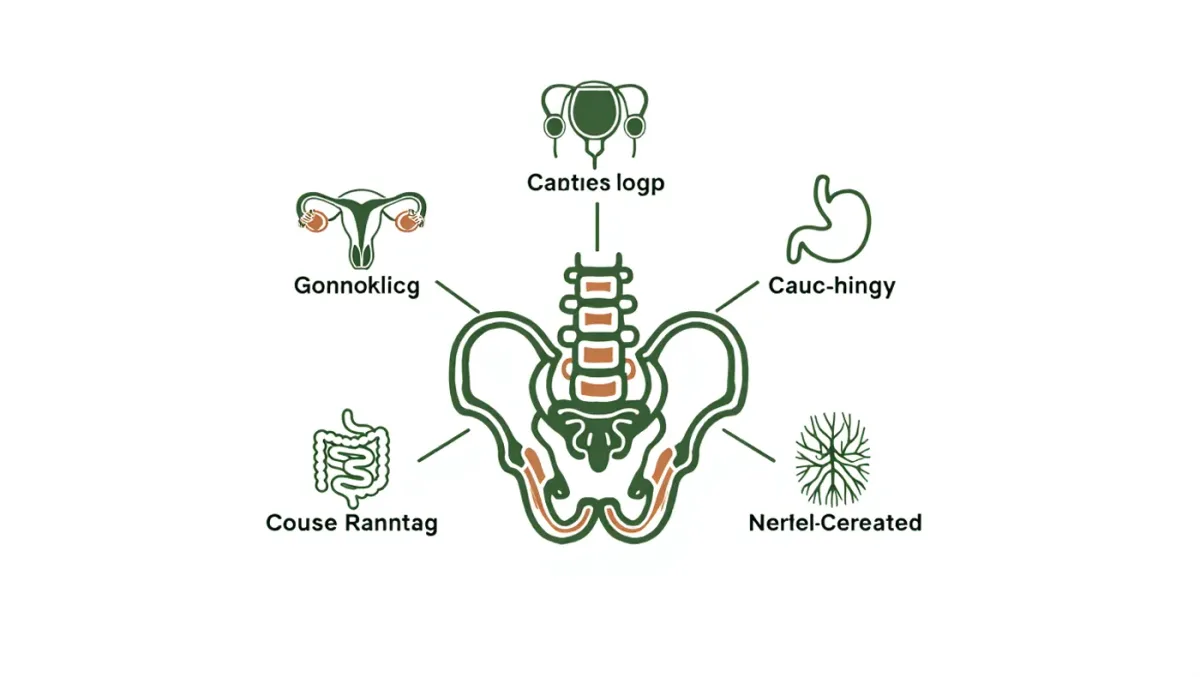
What causes lower back pain in females: four contributors
Four patterns account for most cases that follow the female cycle or life stage. Each sends pain to the same stretch of lower back. Location alone rarely settles the question.
- Period pain that spreads from the womb to the back and thighs.
- Endometriosis, where womb-like tissue grows elsewhere and inflames nearby areas.
- Pregnancy, which shifts posture and loosens the joints of the pelvis.
- Everyday strain from posture, lifting and weak core support.
Period pain and referred back pain
Period cramps are the most familiar answer to what causes lower back pain in females month after month. The NHS describes period pain as cramps in the tummy that spread to the back and thighs. The womb tightens during the period, and the cramps follow. They usually last up to three days. Heat, gentle exercise and suitable pain relief take the edge off. Cramps severe enough to disrupt normal activities deserve a medical review rather than endurance. This connects to our earlier piece, Lower back pain relief: options ranked by strength of evidence.
Endometriosis and cyclical pain
Endometriosis runs deeper. Cells similar to the womb lining grow in other parts of the body. The NHS lists pain in the lower tummy and back among its symptoms. Severe period pain belongs on the list. So do pain during or after sex and pain with urination or bowel movements. There is no cure. Painkillers, hormonal treatments and surgery can manage it. Back pain that tracks the cycle, rather than activity, is a pattern worth naming to a doctor. Readers following this should also see Lower right back pain: muscle strain or something deeper.
Pregnancy-related lower back pain
Pregnancy remodels the body's centre of gravity. ACOG, the American College of Obstetricians and Gynecologists, explains the mechanics. The expanding uterus shifts the centre of gravity. It also stretches and weakens the abdominal muscles. A pregnancy hormone relaxes the ligaments in the joints of the pelvis. Extra weight adds strain. The pain often worsens late in the day as a result.
Relief leans on mechanics. Low-heeled supportive shoes help. So does back support when sitting, and squatting to lift instead of bending the back. Side sleeping with a pillow between the knees eases the pelvis. ACOG sets three clear triggers for an ob-gyn call. Severe pain is one. Pain lasting beyond two weeks is another. Fever, burning urination or bleeding is the third.
Everyday structural strain
Beyond hormones, the usual mechanics still lead any honest cause list. Muscle strains and long static postures sit near the top, the NHS notes. The sacroiliac joints, where the spine meets the pelvis, can also protest under load. Pregnancy loosens them further. Movement, strength work and an ergonomic reset treat this tier. Strong core muscles share the load with the spine. A few minutes of daily movement keeps that support in place.
Red flags that need urgent care
Some back pain needs urgent assessment, whatever its cause. The NHS lists the warning signs. Any of the following calls for same-day contact:
- numbness, tingling, weakness or pain in both legs.
- loss of feeling around the genitals or anus.
- bladder or bowel changes.
- chest pain, or pain that started after a serious accident.
- fever or feeling generally unwell alongside the pain.
Fever with back pain can point to an infection. That mix belongs with a clinician the same day. A short account of when each sign started helps that visit move fast.
Conclusion: the pattern names the question
What causes lower back pain in females is rarely one thing for life. It is often one thing per chapter. A pain-and-cycle diary gives a clinician the shortlist. So do honest notes on posture and activity. Clear notes turn a vague ache into a useful clue. The best questions to bring: does this track the cycle, is pregnancy a factor, and is endometriosis worth excluding?