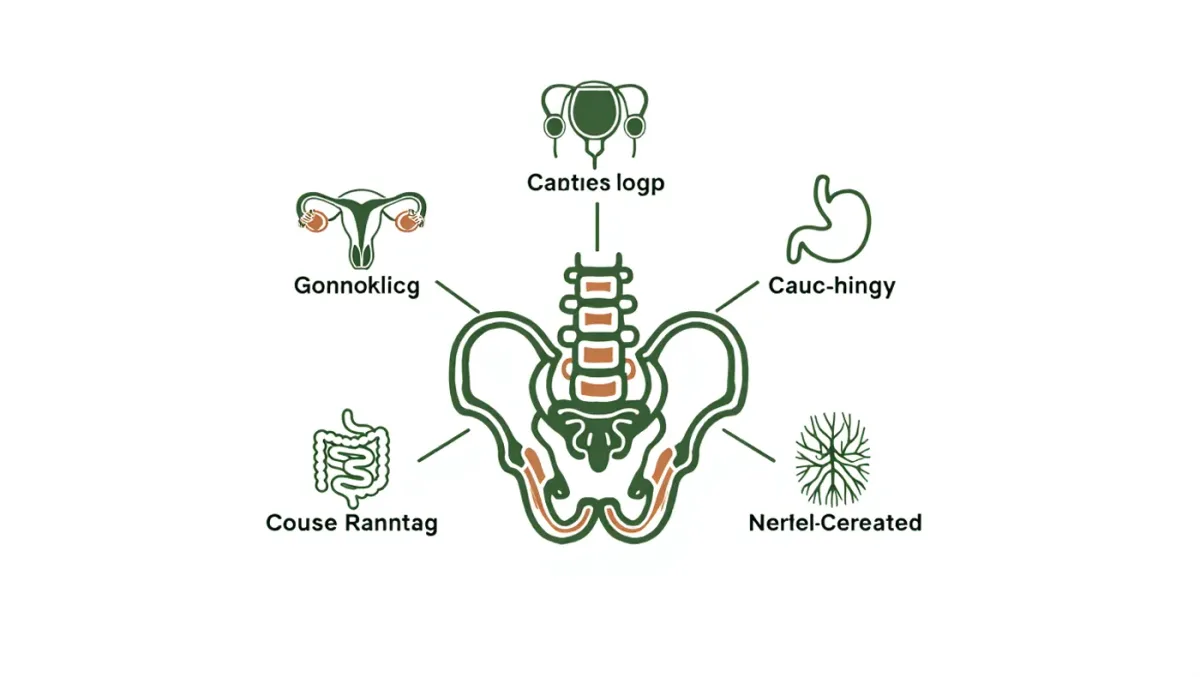

Lower right back pain usually tells a muscle story. A strained lift, a twisting reach, or a long day of sitting explains most one-sided aches. Time generally settles them. The right side has neighbors, though. The right kidney, its drainage system, and even the appendix can send pain to the same small zone.
One clue does useful work: behavior with movement. Pain that shifts with position, stretching, or a slow walk usually points toward muscle and joint. Pain that holds steady, no matter the position, points elsewhere. Organ causes of lower right back pain behave that way. Fever and urinary changes strengthen that suspicion. That combination deserves a clinician. Readers following this should also see Upper back pain: why thoracic aches behave differently.
Common muscular causes of lower right back pain
Muscle strain sits at the top of most explanations. Twisting lifts, sudden reaches, and hours of slumped sitting all irritate the low back. One-sided aches often follow. The NHS, which covers back pain broadly, notes that it usually improves within a few weeks. Staying active helps more than long bed rest. An ache that eases with position changes fits this ordinary pattern. Cold packs suit a fresh strain, and heat suits stiffness, per NHS advice. A simple pattern check helps too. Pain that worsens with a forward bend or a twist usually blames muscle or joint. Pain unchanged by either motion keeps the organ question open.
Timing adds a second clue. Strain stories tend to ease within days to weeks. Organ stories tend to hold or worsen. The pace of the pain often matches the part behind it.
Kidney trouble landing on the right side
The kidneys sit high against the back muscles, one on each side. The National Institute of Diabetes and Digestive and Kidney Diseases, or NIDDK, lists the signs of a kidney infection. Fever, pain in the back, side, or groin, and painful urination make up the set. That combination is not a stretching problem. Early treatment prevents most complications, NIDDK notes.
Kidney stones announce themselves differently. NIDDK points to sharp pain in the back, side, lower abdomen, or groin. Blood in the urine can join the picture. Steady right-sided pain, with no position that eases it, fits the stone pattern more than the strain pattern. Urinary changes tip the scale further. NIDDK adds that small stones may pass with no symptoms at all. Size and position shape the story more than side alone. This connects to our earlier piece, Stretches for lower back pain: five moves, step by step.
Appendicitis: a right-side emergency near the back
Appendicitis earns its own paragraph. MedlinePlus describes the main symptom as pain in the abdomen, often on the right side. It begins suddenly and gets worse over time. Nausea, vomiting, loss of appetite, and low fever often ride along. The pain usually settles in the lower right abdomen, close to the back's right flank. A stubborn right-sided ache with fever and vomiting therefore belongs in emergency assessment. It does not belong in a stretching session. MedlinePlus is blunt on this point. Appendicitis is a medical emergency. Not everyone shows every symptom, MedlinePlus cautions. The list is a pattern, not a checklist.
Red flags for one-sided back pain
Certain company makes any lower right back pain urgent. The NHS advises urgent or emergency care when pain comes with:
- numbness, tingling, weakness, or pain in both legs.
- loss of feeling around the genitals or anus, or bladder and bowel changes.
- fever, chills, or feeling generally unwell.
- chest pain, or onset after a serious accident.
Blood in the urine also changes the question. It shifts attention from spine to kidney, per NIDDK guidance. That finding merits same-day assessment. A recent fall or car accident matters as well. The NHS counts onset after serious accidents among the emergency reasons. When in doubt, a call costs little. Waiting can cost a great deal.
Muscle strain or organ problem at a glance
A short comparison can sort the two stories before any visit.
- Strain pain usually moves with position. Organ pain tends to hold steady.
- Strain pain often eases with rest or heat. Organ pain ignores both.
- Fever, chills, and feeling unwell point away from muscle.
- Urinary changes, nausea, or blood in the urine point the same way.
- Onset after a twist or a long drive favors strain. Onset at rest favors a check-up.
None of these lines is a diagnosis. Each one simply sharpens the story a clinician hears first.
Conclusion: asking a clinician the right question
Lower right back pain is usually ordinary. Ordinary is the answer most people hope for. The useful frame for a clinician visit is behavior. What makes the pain worse? What eases it? What came with it, from fever to urinary changes? Position, fever, and urinary changes form the core of that conversation. Those three answers sort muscle from organ faster than any amount of waiting.