Stretches for lower back pain earn a place in nearly every sensible care plan. The National Health Service in Britain urges people with back pain to stay active and keep up daily activities. Its physiotherapist guidance even demonstrates simple stretches. MedlinePlus lists exercise among standard back pain treatments. The logic is simple. Motion feeds the spine. Fear of motion starves it.
Five stretches for lower back pain follow, described the way a physical therapist might explain them. All of them need only a soft surface and a few unhurried minutes. Every move carries the same rule. Stop if pain sharpens. Comfort, not intensity, is the goal from the first rep to the last. This connects to our earlier piece, Upper back pain: why thoracic aches behave differently.
Safe stretches for lower back pain, move by move
Each description assumes a slow pace, easy breathing, and no bouncing.
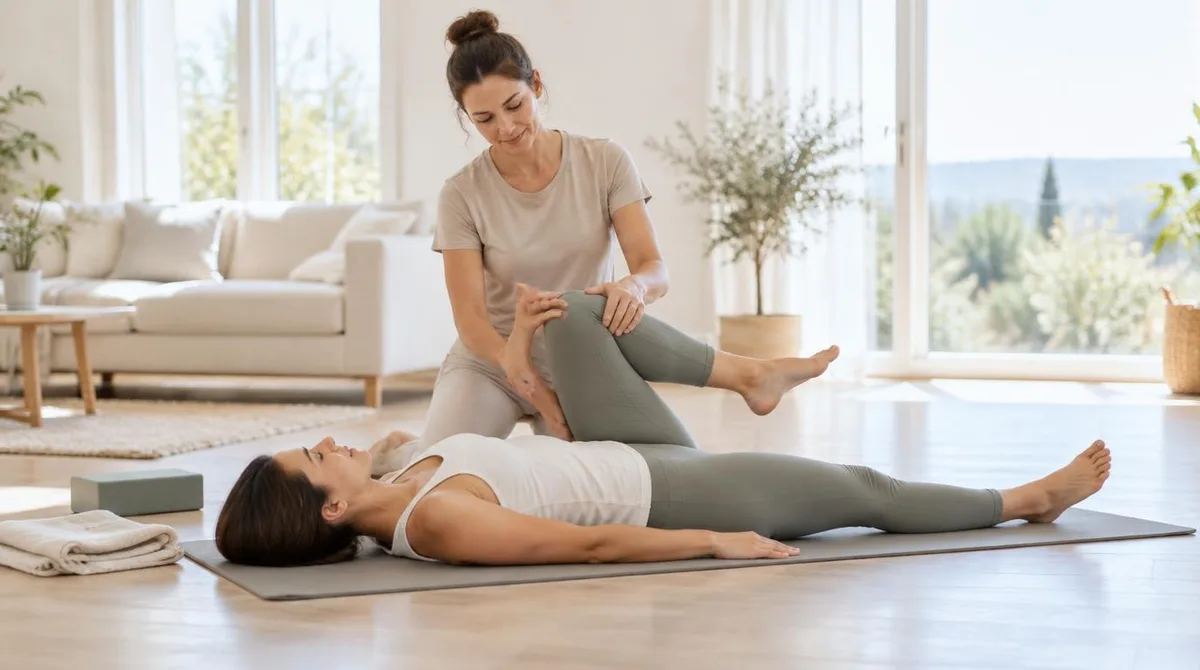
- Knee-to-chest: the person lies on the back with knees bent, draws one knee toward the chest, holds for a few slow breaths, then switches sides.
- Pelvic tilt: still lying down with knees bent, the person gently flattens the low back against the floor, holds briefly, and releases.
- Cat-cow: on hands and knees, the person rounds the spine toward the ceiling while breathing out, then lets the belly sink gently while breathing in.
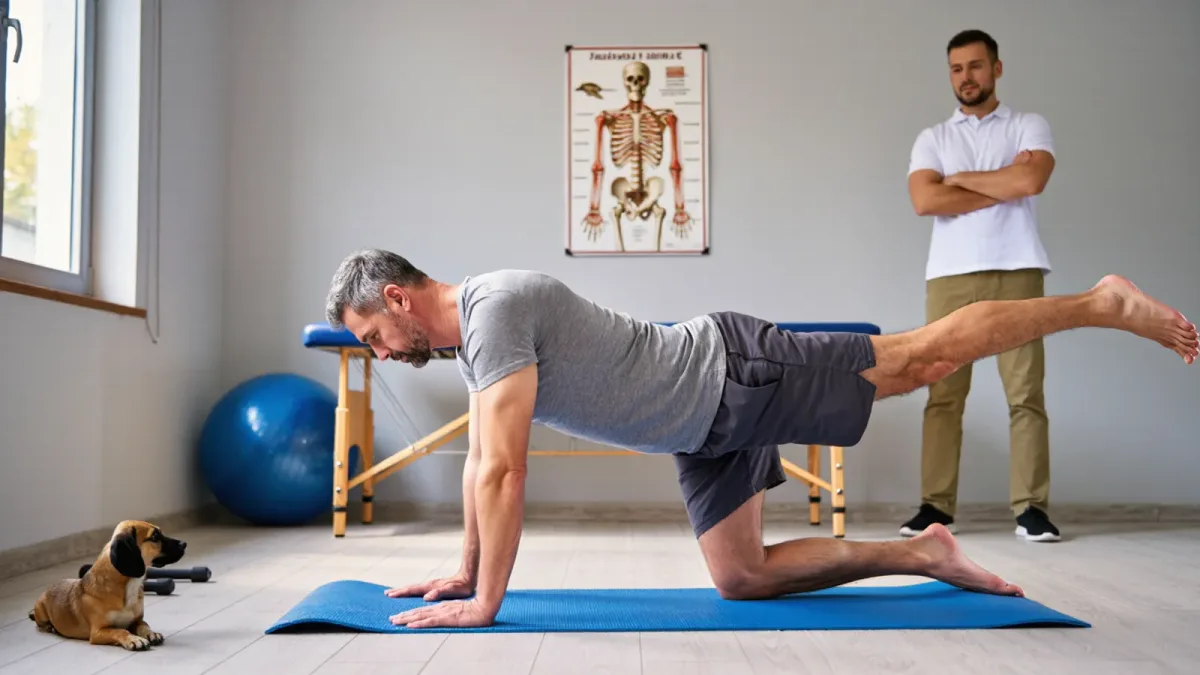
- Bird-dog: on hands and knees, the person reaches one arm forward and the opposite leg back, holds a steady line for a breath or two, then changes sides.
- Lying rotation: lying on the back with knees bent, the person lets both knees fall gently to one side, keeps the shoulders flat, holds a few breaths, and returns to center before switching.
These five appear in some form across clinical advice, including the NHS demonstrations. A physical therapist can adjust them for a specific body. That adjustment is worth seeking when pain persists or returns. Breathing sets the rhythm for all five moves. A slow exhale during the effort keeps the whole body calm. Rushed, breath-holding repeats defeat the purpose.
Stop rules while stretching
Stretching should feel like mild, spreading effort. It should never feel like alarm. The NHS advice to stop if pain worsens applies to every move here. Sharp pain means pause. Numbness, tingling, or dizziness mean the same. A clinician should hear about any of those that persist. Pushing through such signals turns a helpful practice into a harmful one. Next-day soreness is a different matter. Mild, even soreness usually settles within a day or two. A clinician should still hear about anything that lingers. For related coverage, see Signs of high blood pressure: mostly silent, still measurable.
How often, and how much
How often to do stretches for lower back pain is an individual question. The NHS stays general on purpose. It favors daily movement, such as walking, swimming, yoga, or pilates, over long bed rest. A good question for a clinician or physical therapist is which moves suit a given episode. How many repeats to build toward is another. Slow consistency beats ambitious bursts. NIAMS counts back pain among the most common medical problems, which is why simple plans matter.
Red flags before the first stretch
Some back pain needs assessment before any exercise program. The NHS advises urgent assessment when pain comes with:
- numbness, tingling, weakness, or pain in both legs.
- loss of feeling around the genitals or anus.
- bladder or bowel changes.
- chest pain, or onset after a serious accident.
Feeling feverish or generally unwell with back pain also belongs on the urgent list, the NHS notes. With any of those signs, stretching waits. A clinician comes first.
A simple weekly rhythm
The NHS favors daily movement over long rest, and a light plan beats no plan. One workable shape for a week: walk on most days, keep the five moves to a short daily set, and add one gentler session such as swimming, yoga, or pilates if the body agrees. Each piece stays short. Ten unhurried minutes count.
Progress comes from repeats, not effort. A move that feels easy this week earns one more slow repeat the next. A move that stirs pain loses its turn for a few days. The stop rules apply on day one and day one hundred alike. A physical therapist can tune the rhythm for a given body and episode.
Conclusion: motion with guardrails
Stretches for lower back pain work because the spine tolerates gentle motion better than fear and stillness. Knee-to-chest, pelvic tilts, cat-cow, bird-dog, and easy rotations cover the basics safely for most people. Respecting stop rules and red flags keeps the practice on the helpful side. A clinician or physical therapist can turn these moves into a plan with a name on it.