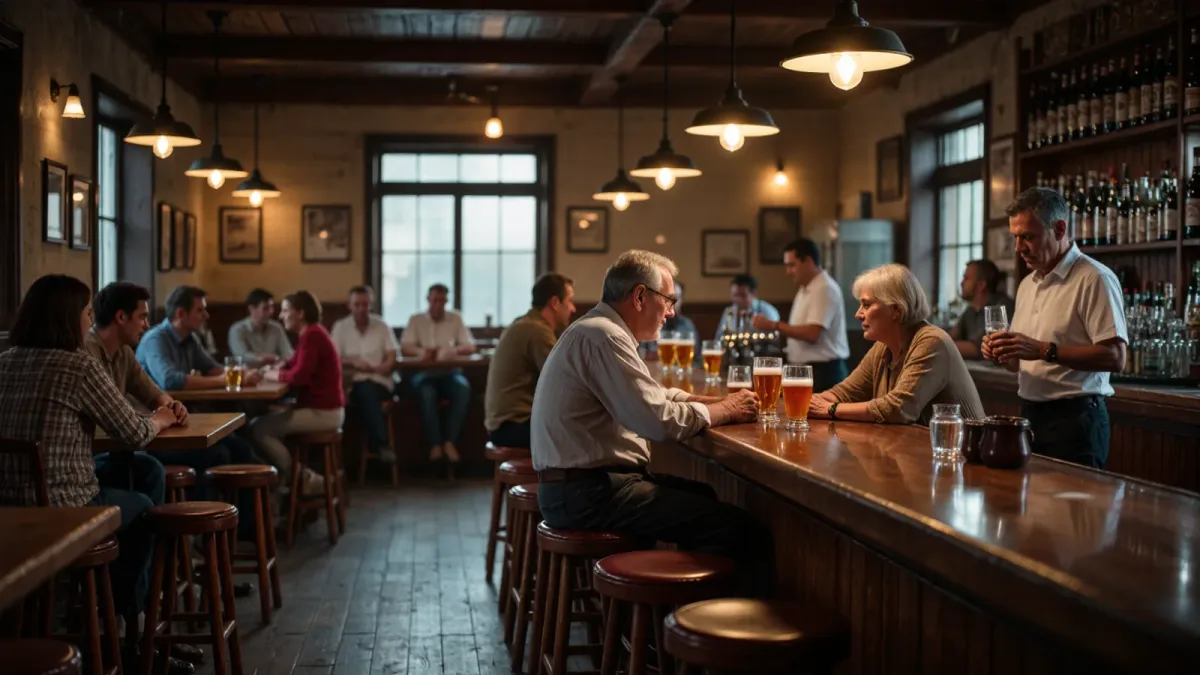

In Ketchikan, Alaska, wellness is not a product you buy. It is a calendar. A report from KRBD, the town's public radio station, published on November 25, 2026, laid out what the Ketchikan Wellness Coalition has planned for the weeks ahead: a sober Christmas event, a cultural celebration called Reflections of Us on December 8, and an online Grief Share service for people who need help with loss. According to KRBD, Erica Feldmann and Bailey Singstad shared the details on air.
Why does a short local segment deserve a closer look? Because it shows what community health looks like when it is built by neighbors rather than clinics. The coalition works out of an office at 60 Don Finney Lane, suite 203, and can be reached at 907-225-9355. Those are small details. But they are the kind that matter when someone in town needs a place to show up. Readers following this should also see The anxiety Inside Out 2 portrays: what research says it gets right.
For readers outside Alaska, the pattern is still worth studying. Seasonal events, cultural identity and grief support sit side by side on one list. That mix is not accidental, and each piece plays a different role.
Why does a sober Christmas matter?
A sober Christmas event gives people a holiday gathering where alcohol is simply not part of the picture. For anyone in recovery, or for anyone who finds the season difficult, that removes a specific pressure. The holidays are full of expectations, and a sober option means nobody has to explain a choice at the door. This connects to our earlier piece, Peptides for Recovery and Longevity: A Second Look Before the Injection.
The KRBD report did not list a date or venue for the sober Christmas in the summary provided. What it did establish is that the event is coming up and that the coalition is treating it as a headline item for the season. That tells you something about local priorities: celebration and sobriety are being held together, not set against each other.
What is Reflections of Us?
Reflections of Us is a cultural celebration scheduled for December 8, per the KRBD report. The coalition's own framing, as relayed on air, places culture inside wellness rather than beside it.
That is the quiet insight of the whole calendar. A cultural celebration is not a wellness event in the usual sense of the word. Yet identity, belonging and shared tradition are part of how many communities support mental and emotional health. Putting it on the same list as grief support says the coalition sees the whole person, not just the problem.
How does an online grief service fit in?
Grief Share is described by KRBD as an online service for those needing help. Loss does not keep office hours, and in a spread-out place like southeast Alaska, an online format matters. It means the distance between someone's kitchen table and a support group can be zero.
Grief is one of the most common experiences people carry quietly. A standing online option lowers the barrier for anyone unsure whether their loss "counts." It does. If loss is sitting heavy this season, general guidance on rest and coping, like our wellness coverage, can be a starting point alongside local support.
What should readers take from this?
Three takeaways, none of them complicated:
- Wellness programming works best when it is local, seasonal and specific to what a community actually faces.
- Recovery, culture and grief support belong on the same calendar, because people do not experience them separately.
- Access details are part of the service. A phone number and a suite number turn a good idea into something a person can use.
For anyone in the Ketchikan area, the coalition's contact details are in the KRBD report, and the station's segment includes links to KWC's website and Facebook page. For readers elsewhere, the model travels: check whether your own community has a coalition, a grief group or a sober holiday gathering. If it does not, the gap is the finding.
One caution in the other direction: a local radio summary is a starting point, not a full record. Dates, registration details and eligibility for any of these programs should be confirmed with the coalition directly. And anyone facing a health or mental-health concern should talk with their own clinician about what fits their situation.