
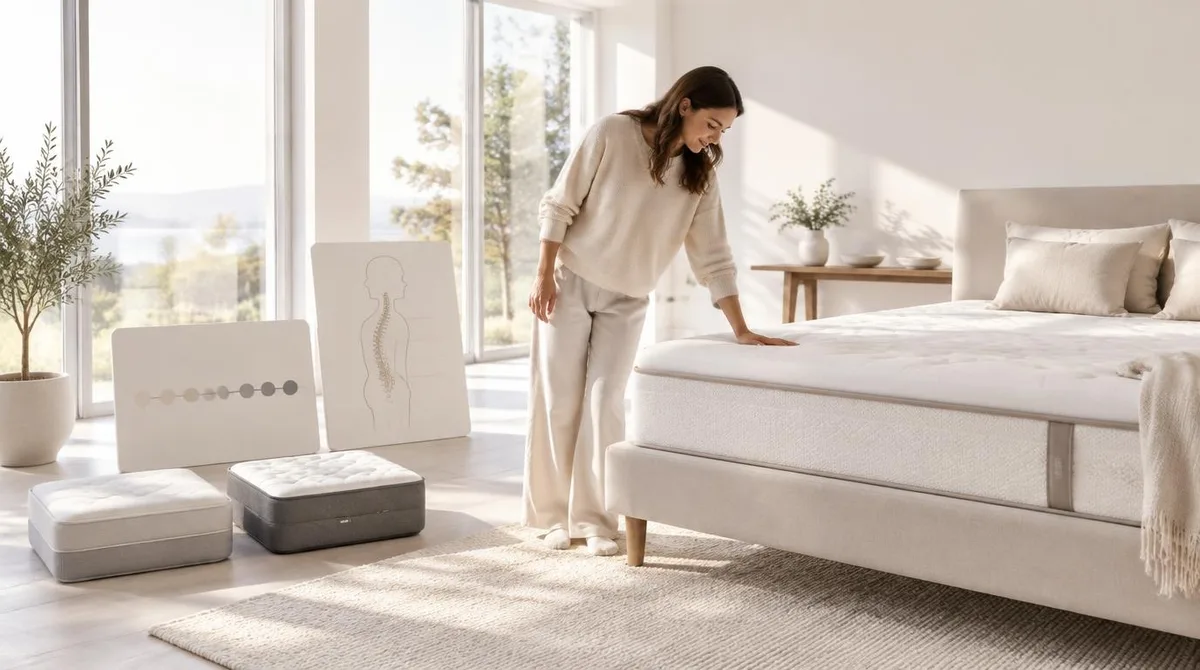
The best mattress for back pain is usually medium-firm, not rock hard. A large trial in The Lancet made the point directly. Researchers gave 313 adults with chronic low back pain either a firm or a medium-firm mattress. After 90 days, the medium-firm group reported less pain and less disability. Fit matters more than brand, and comfort is a measurable thing.
That finding surprises many shoppers, because old advice praised hard beds. The science now points elsewhere, and the shopping rules that follow from it are simple enough to check off in one afternoon.
What the firmness science shows
Firmness and support are not the same thing. The Sleep Foundation draws the line cleanly: firmness is how soft or hard a bed feels, while support is whether it keeps the spine aligned. A mattress that is too soft lets the hips sink and rounds the lower back. A mattress that is too firm presses on the shoulders and hips without letting them settle.
Medium-firm hits the balance for most people with back pain. In the Lancet trial, the medium-firm group did better on pain while lying in bed, pain on rising, and day-to-day disability. The best mattress for back pain, in practice, keeps the spine neutral while the surface still cushions the joints. Firmness scales run from 1 to 10 in most guides, with 6 to 7 described as medium-firm, though labels vary by brand. This connects to our earlier piece, Upper back pain: why thoracic aches behave differently.
Sleep position changes the answer
Side sleepers usually need a slightly softer surface, because the shoulder and hip need room to sink. Back sleepers do well in the middle of the scale. Stomach sleepers often need a firmer bed, since a sagging midsection strains the lower back. No single best mattress for back pain fits every posture.
Body weight shifts the scale again. Lighter sleepers press less material into action and often prefer softer beds. Heavier sleepers sink through soft layers and usually need firmer ones for the same support. A medium-firm label is a starting point, not a verdict. Pillows finish the job: a pillow that keeps the neck in line with the spine can make a decent mattress feel better overnight.
Trial rules that protect the purchase
Finding the best mattress for back pain is half research and half test drive. Most experts suggest sleeping on a new mattress for at least 30 nights before judging it, because the body needs time to adapt. Many brands now offer 100-night trials, which covers that window with room to spare.
The fine print decides the real value of a trial. Return fees, who pays return shipping, and whether the mattress must be free of stains all vary by brand. A receipt and a washable protector keep the option open. A calendar note on the first night keeps the return deadline honest, and photos of the care label keep any warranty claim clean. In-store testing still helps too: lying down for ten minutes in a favorite sleep position tells more than any label, and it costs nothing but time. For related coverage, see Signs of high blood pressure: mostly silent, still measurable.
Habits that help alongside
Back pain is one of the most common medical problems, and MedlinePlus notes it affects eight in ten people at some point in life. A better mattress helps, but it works best in a package: movement through the day, a supportive pillow, and care from a clinician when pain persists. Pain that lasts weeks, numbs a limb, or disrupts sleep deserves a medical evaluation, not a bigger purchase. Sleep itself is medicine for pain, and a mattress that protects sleep protects the back in return.
Conclusion
The best mattress for back pain is usually medium-firm, chosen for sleep position and body weight, and tested through a real trial window. The Lancet trial data favors medium-firm over firm for chronic low back pain, and the 30-night rule protects the choice. A good return policy is not a nicety; it is part of the product. Sleepers who pair the right surface with good habits give their backs the best odds.