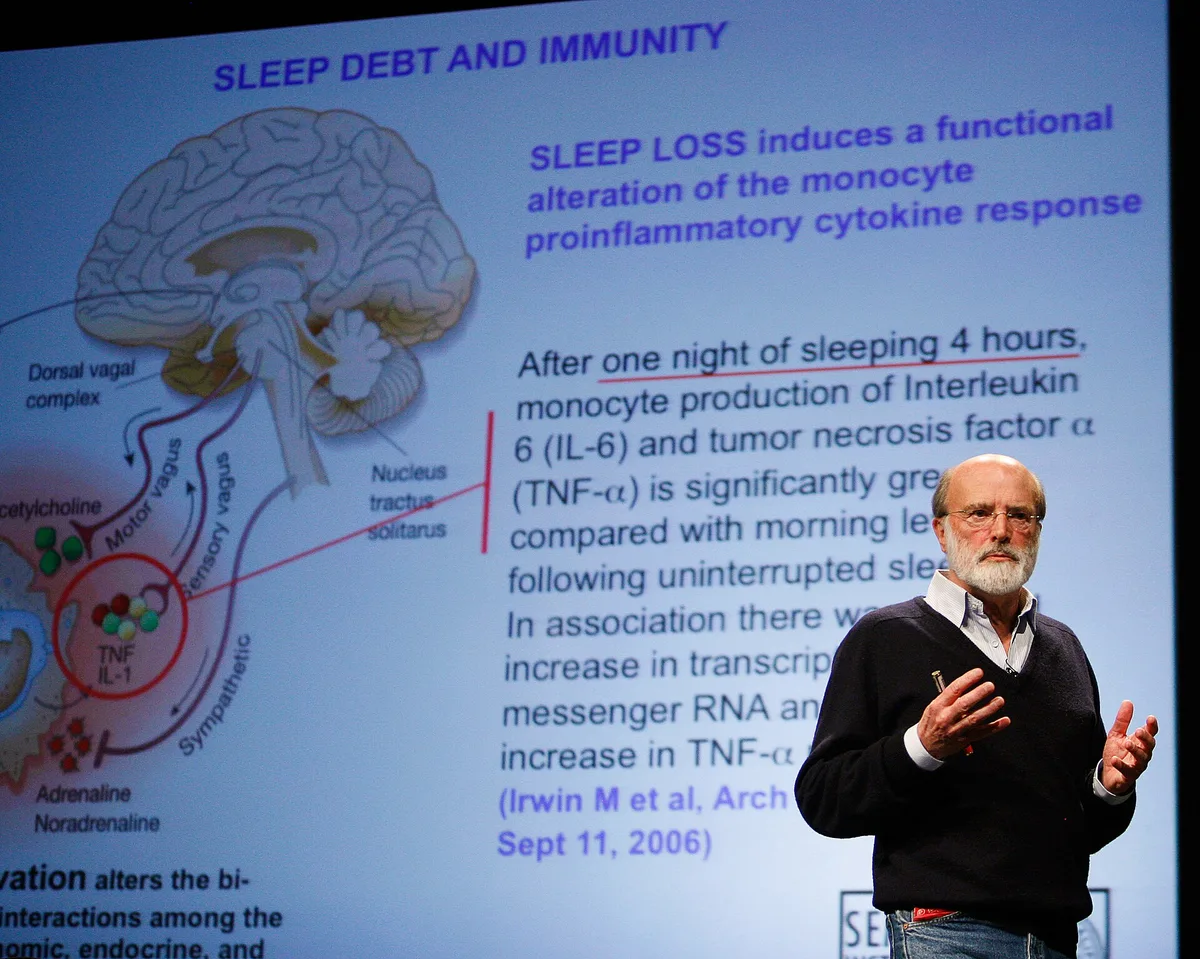
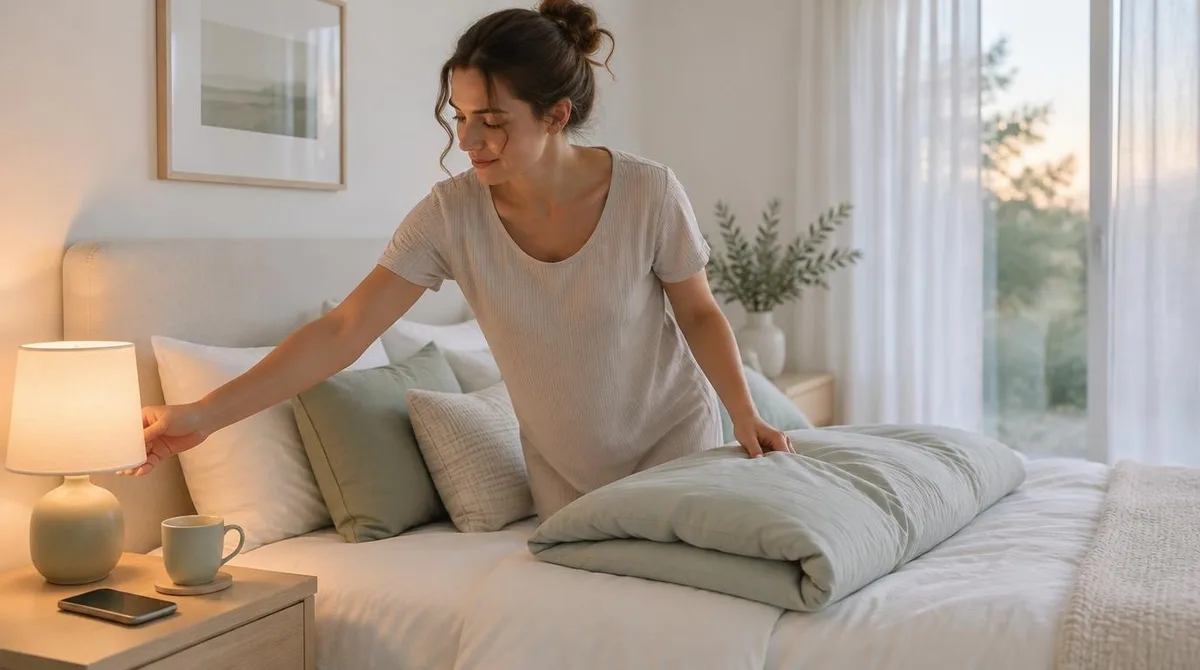
Sleep hygiene is the set of daily habits that make good sleep more likely. Some of those habits are backed by solid public-health guidance. Others are mostly packaging. The habits with the strongest support are simple: keep a consistent bedtime, keep the bedroom cool and quiet, dim the screens before bed, and watch caffeine and alcohol timing.
That matters because sleep is not a luxury. The CDC lists better mood, stronger immunity, improved heart health and a lower risk of conditions like type 2 diabetes and heart disease among the benefits of getting enough sleep. So the question is not whether to bother with sleep habits. It is which ones deserve your effort first.
What does sleep hygiene actually mean?
The term sounds clinical, but it just means the routine and environment around your sleep. Think of it like any other ritual: the texture of the evening, the timing, the small repeated choices. The CDC groups these habits into a short list: going to bed and waking at the same time every day, keeping the bedroom quiet, relaxing and cool, turning off electronic devices at least 30 minutes before bed, avoiding large meals and alcohol late in the evening, skipping caffeine in the afternoon or evening, and exercising regularly.
None of these promise perfect sleep. They raise the odds. And if you do them consistently and still struggle, that is a sign to talk to a clinician rather than buy another gadget.
Which habits have the strongest evidence?
Ranked roughly by how firmly the guidance supports them, here is what the sources agree on.
- Consistent timing. Going to bed and getting up at the same time every day is the first habit the CDC names. Your body runs on a 24-hour cycle, and regular timing helps that cycle stay aligned.
- Light and screens. The CDC advises turning off electronic devices at least 30 minutes before bedtime. Light is a powerful cue: the National Institute of Neurological Disorders and Stroke explains that a cluster of cells in the brain receives light information directly from the eyes and uses it to set your sleep-wake rhythm, and that the hormone melatonin rises once the lights go down.
- Cool, quiet bedroom. A cool temperature and a quiet, relaxing room are on the CDC's list. This is also the habit least likely to cost you money.
- Caffeine and alcohol timing. The CDC recommends avoiding caffeine in the afternoon or evening and avoiding large meals and alcohol before bed. Caffeine works by blocking a brain chemical called adenosine that builds sleepiness, according to the NINDS, which is why a late coffee can quietly sabotage a bedtime.
- Regular exercise. Exercising regularly and eating a healthy diet round out the CDC's habit list.
Where does the marketing noise come in?
Sleep is a huge product category, and not every claim on the shelf traces back to the evidence above. A few honest distinctions help. This connects to our earlier piece, Choosing the best mattress for back pain: firmness science and trial rules.
- A comfortable mattress and pillow can matter for how well you sleep. But no mattress cures a medical problem. If back pain is the issue, the real questions are about firmness, support and a proper trial period, which we cover in our guide to choosing the best mattress for back pain.
- Supplements and sleep aids marketed as transformations deserve skepticism. The Sleep Foundation notes that about one in three American adults does not get enough sleep, which is exactly the kind of widespread problem that attracts quick fixes. Habits come first; products are secondary.
- Elaborate bedtime routines sold as essential are mostly optional. What the CDC actually recommends is a short, boring list. Boring is fine. Boring is what works.
What this means in practice: spend your effort on timing, light, temperature and caffeine before you spend money.
How much sleep do you actually need?
Habits only help if you are leaving enough room for sleep. Needs change with age. The Cleveland Clinic summarizes the general recommendations: adults need seven to nine hours, teenagers eight to ten, school-aged children nine to twelve, and young children between ten and fourteen hours including naps.
Those ranges are not universal. The Cleveland Clinic notes that sleep needs vary from person to person, and that some people inherit a tendency to need less sleep. Illness, injury recovery and early pregnancy can also raise your needs. If your natural sleep falls far outside the range for your age, that is a good question for a primary care provider rather than something to force.
It also helps to know what good sleep looks like. Sleep runs in cycles of roughly 90 to 120 minutes, moving through light sleep, deep sleep and REM, the dreaming stage, according to the Cleveland Clinic. Deep sleep is when blood pressure drops and the body releases growth hormone for tissue repair, the Sleep Foundation explains. Fragmented nights cut into those stages even when total hours look adequate.
When habits are not enough
Sleep hygiene has limits, and knowing them is part of using it well. Some people have health conditions that block quality sleep no matter how disciplined the routine is. The CDC names common sleep disorders, including insomnia, restless legs syndrome, narcolepsy and sleep apnea, and recommends talking to a healthcare provider if you regularly have problems sleeping.
One practical step the CDC suggests is a sleep diary: noting when you go to bed, wake during the night, wake in the morning, nap, exercise, and drink alcohol or caffeine. Bring that record to an appointment and the conversation starts from data instead of guesswork.
Watch for the signs of poor sleep quality the CDC describes: trouble falling asleep, waking repeatedly through the night, or feeling tired even after enough hours in bed. Those patterns are worth raising with a provider, not solving with stronger willpower.
Our analysis: start small and stay boring
Our reading of the evidence is that sleep hygiene works best as a small, repeatable ritual rather than an overhaul. Pick the anchor first: a consistent wake time, seven days a week. Then layer in the cheap wins, like a cooler room and an earlier last coffee. The CDC's habit list is deliberately modest, and modest habits are the ones that survive a busy week.
If evening worry is what keeps you awake, that is a different problem with its own approaches. We look at rest and anxious thoughts in our pieces on Bible verses for anxiety and on what research says about the anxiety Inside Out 2 portrays. For related coverage, see The anxiety Inside Out 2 portrays: what research says it gets right.
The evidence establishes that habits around timing, light, temperature and substances have real backing, and that products promising transformation do not share it. What remains unknown is how much any single habit matters for any single person. If your efforts stall, the next step is not a better gadget. It is a conversation with a clinician, ideally with a sleep diary in hand.