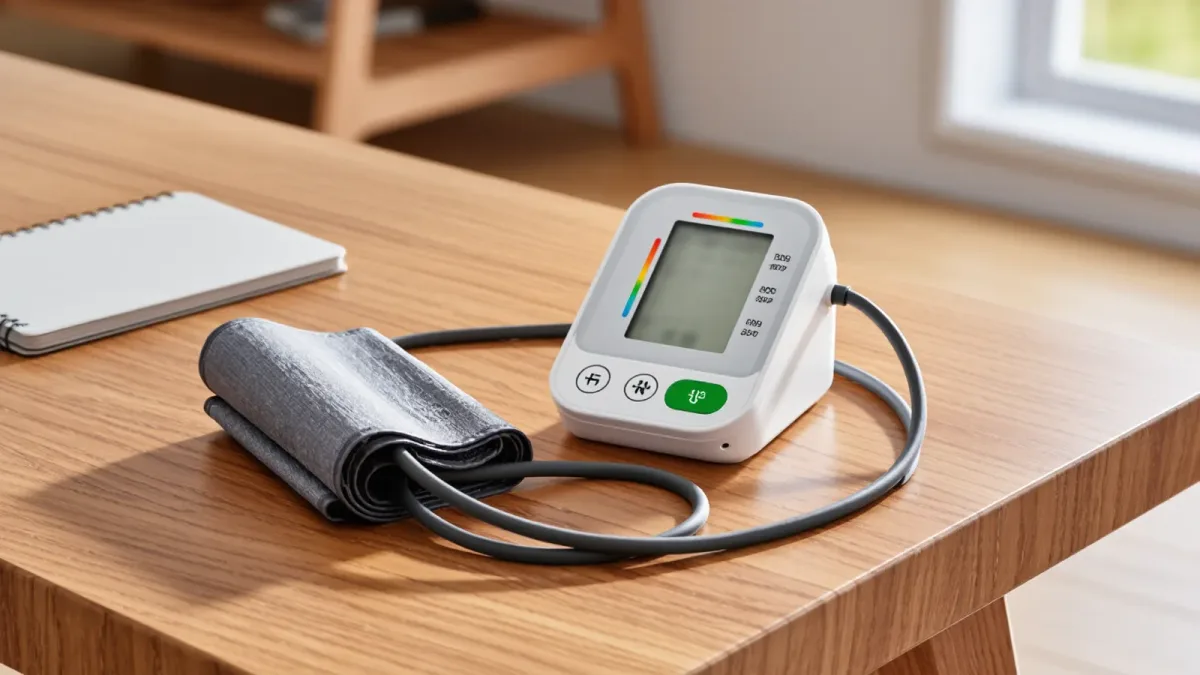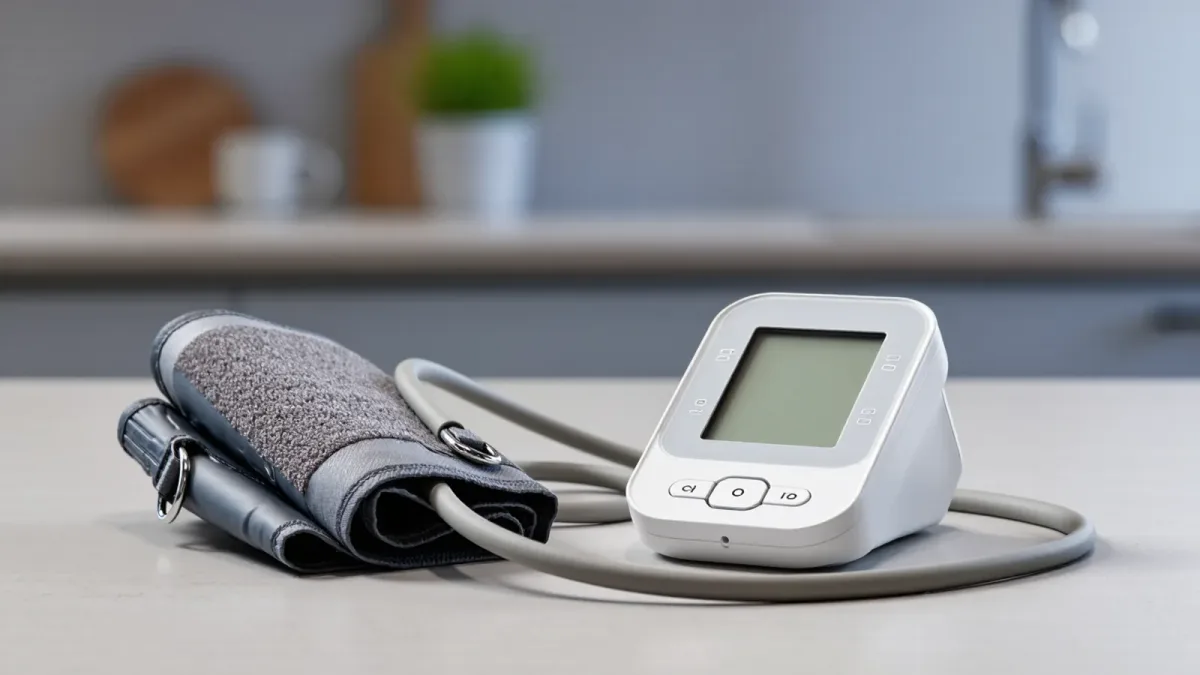

Yes, dehydration can contribute to high blood pressure — but it can also cause the opposite, low blood pressure, and both effects can happen in the same person. Which direction your numbers move depends on how severe the fluid loss is and how your body compensates. The connection runs through hormones, not just through how much water is in your blood.
Here is the short version. When you lose fluid, your blood volume drops, which tends to lower blood pressure. Your body treats that drop as a problem to fix. It releases vasopressin, a hormone that makes your kidneys hold on to water and can also tighten your blood vessels. That tightening can push your blood pressure back up — and, in some cases, above where it started. We covered a connected angle in Stretches for lower back pain: five moves, step by step.
This matters most for people who already have hypertension, the medical term for chronically high blood pressure. If your readings run high on a normal day, a dehydrated afternoon can nudge them higher. This guide explains the mechanism in plain words, what the research does and does not show, and the habits that keep fluid levels steady.
What happens in your body when you are dehydrated?
Dehydration means your body does not have enough fluid to do its work. It can come from sweating on a hot day, from illness with vomiting or diarrhea, from fever, or simply from not drinking enough. Some medications, including diuretics — often called water pills — also increase fluid loss.
Blood is mostly water. According to Cleveland Clinic Health Essentials, roughly 55% to 60% of the body is water, and there are usually about 5 quarts of blood in the system. When fluid is lost, blood volume falls with it. Less volume in the vessels means less pressure — at first.
That is why dehydration most reliably causes low blood pressure. If the drop is steep enough, organs may not get the oxygen they need. In extreme cases, this can lead to shock, which is a medical emergency.
So how can dehydration raise blood pressure?
Your body has a built-in correction system, and it can overcorrect. When blood sodium rises and blood volume falls, the brain signals the release of vasopressin, also called antidiuretic hormone. Vasopressin tells the kidneys to reabsorb water instead of passing it in urine. In high enough concentrations, it also causes blood vessels to constrict — to narrow — which raises blood pressure.
As Healthline's explainer on dehydration and blood pressure puts it, research linking dehydration to high blood pressure is limited, and more work is needed to confirm the connection. The vasopressin mechanism itself, though, is well described: the hormone is released when blood sodium is high or blood volume is low, both of which happen when you lose too much fluid.
Cardiologists who treat dehydration in emergency settings describe the same sequence. Mark Conroy, MD, of The Ohio State University Wexner Medical Center, told The Healthy that low circulating blood volume triggers vasopressin release, and that the hormone constricts blood vessels and raises blood pressure when concentrations are high enough. Pamela Tambini, MD, added that repeated episodes of dehydration can place chronic stress on the cardiovascular system over time.
One honest gap: Dr. Conroy noted there is no precise data on how dehydrated a person needs to be before blood pressure rises. So the mechanism is understood, but the threshold is not.
Which is it — high or low?
Both are possible, and the pattern usually runs low first. Early fluid loss lowers blood volume and can make you lightheaded. Then the hormonal response kicks in, vessels tighten, and pressure rebounds upward. A preventive cardiologist quoted by Cleveland Clinic, Luke Laffin, MD, describes this as an overcorrection: the body's fix for low pressure can push it higher than optimal, especially in someone already dealing with hypertension.
What this means for you is simple. If you track your blood pressure at home and see a reading that does not match your usual pattern, ask yourself whether you have been drinking enough. A single odd reading after a hot, sweaty day is not a diagnosis. A pattern of high readings is a reason to talk to a clinician.
High blood pressure itself is mostly silent. The American Heart Association calls it the "silent killer" because most people have no obvious symptoms, and the only reliable way to know your numbers is to measure them with a cuff. Our guide to signs of high blood pressure covers what warning symptoms look like when they do appear, usually at dangerously high levels. For related coverage, see Signs of high blood pressure: mostly silent, still measurable.
What are the signs of dehydration to watch?
Dehydration usually announces itself before it moves your blood pressure. Common signs include:
- Thirst and dry mouth
- Urinating less often, or urine that is dark in color
- Tiredness or fatigue
- Lightheadedness or dizziness
- Headache
- Confusion, in more noticeable cases
Emergency physicians caution against waiting for thirst. By the time you feel thirsty, you are usually already somewhat depleted. Older adults and people taking diuretics need to be especially attentive, because both fluid needs and fluid losses vary widely from person to person.
Seek prompt medical care if you cannot keep fluids down, have diarrhea lasting more than 24 hours, notice a rapid heartbeat, or feel extreme exhaustion or confusion. And if low blood pressure comes with cold, clammy skin, quick shallow breathing, a rapid weak pulse, or confusion, that is an emergency — call 911.
How much fluid should you drink each day?
There is no single number that fits everyone. Needs shift with age, weight, overall health, weather, activity level, and pregnancy or breastfeeding. As a general reference point, the National Academies of Science, Engineering and Medicine recommends about 125 ounces (3.7 liters) of fluid per day for men and 91 ounces (2.7 liters) for women, a figure Cleveland Clinic cites in its guidance. Your own needs may be higher in heat, during exercise, or when you are ill.
Practical steps that help:
- Drink when you feel thirsty, and more when you are active, hot, or sick.
- Carry a water bottle so drinking does not depend on remembering.
- Count other fluids too — milk, decaffeinated herbal tea, low-sodium soups, and water-rich foods like fruits and vegetables all contribute.
- If you take a diuretic or have heart or kidney conditions, ask your clinician how much fluid is right for you. A useful exact question: "Given my medications and my blood pressure, how much should I drink on a hot day, and what signs should make me call you?"
Hydration is one lever among many for blood pressure. Diet, sodium intake, weight, and activity all matter too — our nutrition guides cover the food side of that picture.
What this means: the takeaway on dehydration and blood pressure
The evidence supports a clear mechanism and an honest limit. Dehydration lowers blood volume, which can drop blood pressure dangerously. The body's hormonal response — chiefly vasopressin — can then push blood pressure back up by tightening blood vessels. Research on dehydration as a contributor to chronic high blood pressure is limited, so no one should treat extra water as a treatment for hypertension. What drinking enough fluid reliably does is keep your body in balance and remove one avoidable source of swings in your readings.
If your home readings are consistently high, that is a conversation for a clinician, not a hydration problem to solve alone. Bring your log, ask what your target numbers should be, and ask whether any of your medications affect fluid balance. Consistent fluid intake, checked against your own situation, is the sourced next step this evidence supports.