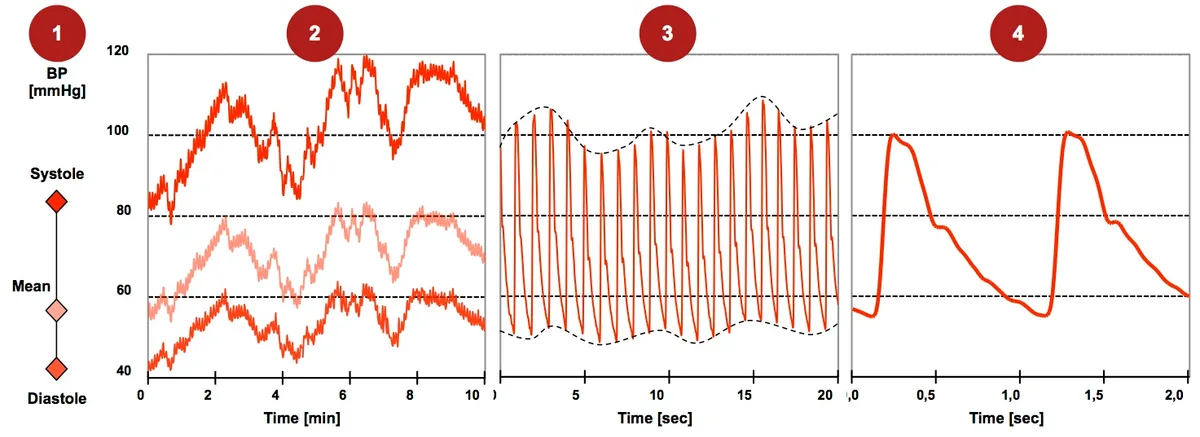

High blood pressure numbers come as a pair, and each half does a different job. The top number, systolic, reads the pressure in the arteries while the heart beats; the bottom number, diastolic, reads it between beats, while the heart rests and fills. In the framework of the American Heart Association, anything under 120/80 mm Hg counts as normal, while 130/80 or above enters stage 1 hypertension.
One framework, applied consistently, keeps the numbers usable. The thresholds below follow the AHA categories, the same ones the National Heart, Lung, and Blood Institute echoes when it describes healthy readings as systolic under 120 and diastolic under 80 mm Hg, with stage 2 starting at 140 or 90.
Reading high blood pressure numbers: systolic and diastolic
Blood pressure is the force of blood against the walls of the arteries, recorded in millimetres of mercury, written mm Hg. The NHLBI defines the two parts plainly: systolic is the force when blood is pumped out of the heart, and diastolic is the force between beats while the heart fills. Both numbers matter, and either one alone can place a reading in a higher category.
The five categories at a glance
The American Heart Association sorts every pair of high blood pressure numbers into one of five boxes. For related coverage, see Signs of high blood pressure: mostly silent, still measurable.
- Normal: systolic below 120 and diastolic below 80
- Elevated: systolic 120 to 129 and diastolic below 80
- Stage 1 hypertension: systolic 130 to 139, or diastolic 80 to 89
- Stage 2 hypertension: systolic 140 or higher, or diastolic 90 or higher
- Severe hypertension: above 180 systolic and/or above 120 diastolic
The severe band needs context. The AHA advises anyone whose reading tops 180/120 to wait five minutes and test again; if the number stays high, contact a clinician without delay, and reach emergency services at once if symptoms such as chest pain, shortness of breath, back pain, numbness, weakness, vision change or difficulty speaking are present. We covered a connected angle in Stretches for lower back pain: five moves, step by step.
What each number does in the body
Systolic pressure reflects the surge each heartbeat sends through the arteries. It tends to rise with age as arteries stiffen and plaque builds, and the AHA notes it is the number that best signals cardiovascular risk after age 50. Diastolic pressure reflects the resting tone of the circuit between beats. A high reading on either scale is enough: the higher of the two numbers sets the category.
Why the numbers stay hidden until measured
High blood pressure numbers rarely announce themselves. The NHLBI notes that symptoms usually do not appear until the condition has already caused serious health problems, and that about one in three US adults with hypertension does not know they have it. That is the case for yearly checks, and for treating any single high reading as a prompt rather than a diagnosis. The AHA recommends confirming with repeated measurements or home monitoring before anyone is diagnosed.
Conclusion: one yardstick, used well
High blood pressure numbers reward a little literacy: systolic for the beat, diastolic for the rest, and one five-box scale that files every reading. Checking at least once a year, re-testing any high value, and bringing the log to a clinician turns two small numbers into a usable answer. Good follow-up questions: which category applies, how often should checks happen, and what target makes sense for this person's history?