
Complete vs incomplete protein sounds like a ranking system. It is really just a description. A complete protein contains all nine essential amino acids — the building blocks your body cannot make and must get from food. An incomplete protein is low or missing one or more of them.
Here is the part most people get wrong: the label says nothing about whether a food is good for you, and it says nothing about whether a plant-based eater will fall short. Your body pools amino acids from everything you eat across the day. What matters is the total pattern, not any single meal or single food.
What does "complete" actually mean in nutrition?
The word is borrowed from everyday English. As Dictionary.com defines it, complete means having all parts or elements and lacking nothing — which is exactly how nutrition scientists use it. A protein food is called complete when its amino acid profile covers every essential amino acid in amounts the body can use.
There are nine essential amino acids. Animal foods — meat, fish, eggs, dairy — generally supply all nine. Most individual plant foods do not, at least not in generous amounts. That is the whole distinction. It is a profile description, not a quality score.
One caution on language: "incomplete" can sound like "defective." It is not. An incomplete protein is simply a protein with a gap. Gaps are easy to fill.
Which plant foods are limited in which amino acids?
Most plant proteins run short on one or two specific essential amino acids, and the pattern is fairly predictable:
- Grains (wheat, rice, oats) tend to be low in lysine, an amino acid abundant in legumes.
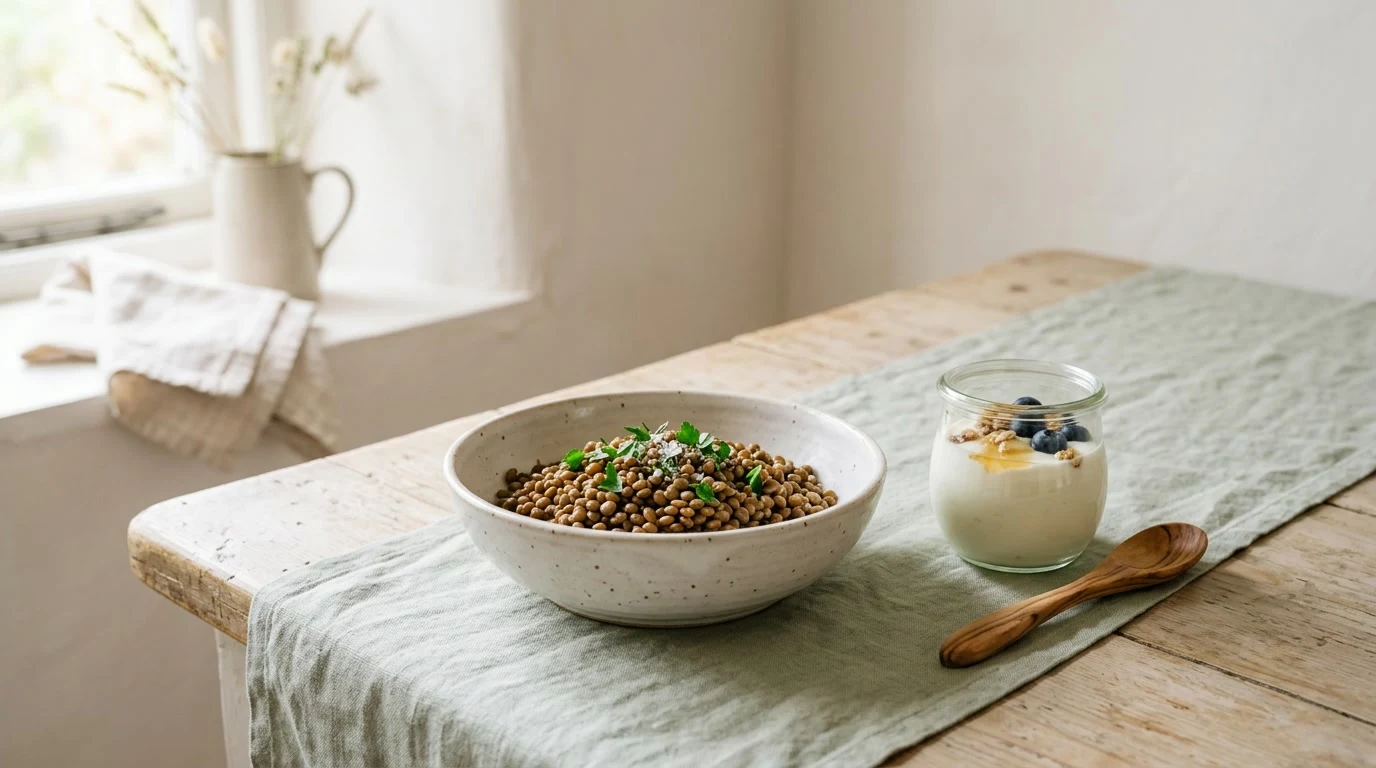
- Legumes (beans, lentils, peas) tend to run low in methionine, which grains supply more readily.
- Nuts and seeds often sit somewhere in between, with their own smaller gaps.
A few plant foods break the pattern. Soy and quinoa are generally considered complete on their own. But for most plant staples, the limitation is real — and largely irrelevant, for reasons the next section explains.
Animal proteins carry no such gaps, which is why foods like eggs show up constantly in protein discussions. Our egg nutrition facts: protein, cholesterol and yolk versus white guide covers that profile in detail, and chicken breast nutrition by preparation shows how cooking changes the protein per gram. We covered a connected angle in Egg nutrition facts: protein, cholesterol and yolk versus white.
Do you need to combine proteins in the same meal?
No. This is the most persistent myth in the area, and it traces back to mid-twentieth-century lab work on single meals that was later superseded. The original idea was that amino acids had to arrive together or the body could not use them. Later research on how the body handles amino acids over longer windows overturned that.
Your body maintains an amino acid pool — a rolling supply drawn from everything you have digested recently. A lysine gap at breakfast gets filled by the lentils at lunch. As long as the day's overall intake covers all nine essentials, the individual meals do not need to be engineered.
Our analysis: this is genuinely good news for anyone eating plant-based. It turns a complicated pairing exercise into a simple habit — eat a varied mix of grains, legumes, nuts and vegetables over the course of a day, and the profile takes care of itself.
What this means for different eaters
For omnivores, the complete vs incomplete protein distinction is mostly academic. Animal foods at any point in the day cover the essentials, so variety is a bonus rather than a requirement.
For vegetarians and vegans, the distinction matters only as a prompt for variety, not as a warning. Beans and rice, hummus and pita, peanut butter on whole-grain bread — these classic pairings work, but they do not need to share a plate. Someone eating a range of plant foods across a day almost always covers the full set without planning it.
For people with high protein needs — hard-training athletes, for instance — total daily protein matters more than the completeness of any single source. A lifter eating generous amounts of varied protein foods has far more headroom than the amino acid labels suggest. For a dense dairy option that is complete on its own, see our cottage cheese nutrition: protein density and the sodium trade-off guide. Readers following this should also see Cottage cheese nutrition: protein density and the sodium trade-off.
Practical steps: how to eat for a complete amino acid profile
- Think in days, not meals. Aim for variety across your day rather than perfect pairing at each sitting.
- Pair grains with legumes often. Their gaps complement each other neatly, which is why the combination appears in food traditions worldwide.
- Do not chase the label. A food being "incomplete" says nothing about its fiber, vitamins or overall value — as our broccoli nutrition: vitamin K, fiber and what cooking changes guide makes clear for a low-protein vegetable that earns its place anyway.
- Ask a clinician about special cases. Anyone managing kidney disease, a restrictive diet or a medical condition affecting protein needs should discuss intake with a registered dietitian rather than relying on general guidance.
More plain-language explainers on food choices live in our nutrition section, alongside broader health guides.
What the evidence settles — and what it does not
The evidence is clear on the mechanism: essential amino acids must come from food, individual plant staples have predictable gaps, and the body combines amino acids across meals rather than requiring them simultaneously. What the label does not tell you is whether a diet overall is adequate — that depends on total intake, variety and individual needs, which is a question for a clinician when health conditions are involved.
The practical takeaway is unglamorous and reassuring: eat a varied mix of protein sources, let the day do the work, and ignore anyone selling a supplement or a pairing schedule on the strength of the words "complete protein."